Every Photo Is a Window
My mother shattered borders one by one, so that I could cross them the way you leaf through an album.
I have thought for a long time about what a border means. As a child, my borders rarely stretched beyond the highway bridge I could see from my grandmother's window on school afternoons, waiting for my mother to finish work. Back then the world seemed infinite to me, a crucible of diversity and wonders, fascinating and frightening. I hold a surprisingly vivid memory of one of the first times I went to Rome with my parents. The immensity of the green Umbrian hills opening before my eyes through the car window, the first metro I ever took, the multitude of people parting around me. A confused world, profoundly different from the small village frozen in time among the Umbrian hills that I was used to watching from my grandmother's window. A world that to my eyes was static, that looked the same from every window scattered through my daily life. A calm world, a happy one.
I was five at the time, and no novice to travel. I have always had the great privilege of parents who taught me the value of moving, of not surrendering to stillness, of letting myself be surprised by curiosity and by difference. But in the eyes of a five-year-old, distance and the passing of time lost their meaning: everything that lay beyond that bridge was something far away, strange, exotic. Rome, like Tunis.
I remember returning to that thought a few years later, already a teenager, one day on the same train, going back to Rome. A city that had long stopped being an exotic, distant place and had given way to a sense of familiarity. Looking once more through that window, I understood that my borders had long since crossed the bridge I used to watch every day, waiting impatiently for my mother to come home. I was beginning to grasp the value of knowledge: how precious the feeling of uncertainty that comes with discovery is, and how important it is that, with time, it gives way to a sense of safety.
Very different must have been the landscape my mother saw as a child from her grandmother's window. An arid, cold landscape, opening onto a Soviet Union in decay. At five she must have witnessed the collapse of a country forced into mourning for the death of a dictator, shaken to her core by the uncertainty of the future. A window whose colors blended into an infinity of greys, where the sun rarely broke through the clouds to reveal the brightness of a prism of colors. Borders lose themselves in the immensity of a white blanket of snow in winter, and in a faint, timid green in a summer that never lasted long enough.
She came to know Rome much later, when the nauseating fumes of the sparkling wine factory where she worked had already soaked into her skin and her roots, and the savings she had set aside allowed her to chase the indestructible dream of that five-year-old girl: to escape, to leave behind a black-and-white reality for less oppressive borders. A city conquered through sacrifice, through endless hours crammed into a rickety bus crossing the scars of an imploded superpower, leaving behind misery, poverty and borders that seemed to close in on themselves instead of opening to the world. She was brought there by a so-called job relocation agency, one that promised help with a tourist visa, a job, a new life in Italy, but that in truth exploited the desperation of entire peoples and the dreams of freedom of a five-year-old girl, dreams grown while watching that black-and-white landscape from her grandmother's window, to monetize them by reducing people to slavery.
A city conquered while fleeing a reality that has afflicted thousands of people: men and women who, searching for a better future, found themselves enslaved, locked in a cell, alienated, stripped of their documents and their identities. I struggle to imagine the effect that a city eternally at the mercy of human and artistic genius, so profoundly different from the anonymous concrete blocks of Chișinău, must have had on a twenty-one-year-old woman, terrified, on the run, yet armed with resilience and a tireless will to do justice to her own dreams. Certainly, the view from the window of an abandoned house, for an undocumented woman in Rome, was a world profoundly different from the historic center that made me dream so much.
The world, the Europe and the Italy of 1998 were profoundly different from today's. As she crossed half of Europe, crammed for three days into a bus with no bathroom together with other people carrying her same resilience, people who as children had gazed at that same black-and-white landscape from countless other windows, my mother was traveling toward a country that offered her an opening. That very year Italy passed its first comprehensive immigration law, one that encouraged regular entry by tying it to integration. But what truly saved her was written in no law: an infinite number of small gestures of humanity, of complicity, of compassion, which allowed her to survive, to escape to Rome, to reach that small village frozen in time among the Umbrian hills, and not to feel alone when my biological father returned to Moldova and left her, at twenty-three, with a whining three-month-old baby. A humanity made of the neighbor who gave me my first bath and whom I have called Grandma since I learned to speak; of the landlord who refused rent from a single mother whose Italian was still broken; of a strong, humble, gentle man who, pushed by an enterprising aunt, found the courage to invite her to dinner, laying the first brick of a family built on the necessity of need and on the love of the complicity that would follow.
Today, instead, that same woman, on the same rickety bus and with the same dream, would find a wall in place of that opening, and instead of imperceptible smiles and great gestures of altruism, a country torn apart by a rhetoric of hate, divided, too folded in on itself to open up to the smile of another. In '98 an inhuman body of law was being humanized, the dignity of every human being recognized. In 2026 those same people, who perhaps no longer cross half of Europe on a rickety bus but half the Mediterranean on a rickety boat, are locked up in repatriation centers: detention without a crime, except that of having dared to cross the borders drawn by a window that, instead of opening onto a blanket of snow, looked out onto a far more arid landscape. That opening has been walled up one brick at a time, law after law, while the rhetoric grew harsher and the hunger for a culprit grew stronger.
Because Italy has always looked for a culprit. First it was the southerner riding north in a packed train, greeted by signs saying the room was not for rent and by the accusation of stealing jobs. Then, when that southerner went back to being simply Italian, the same finger and the same identical phrase, “they steal our jobs”, moved first beyond the Balkans, then across the Mediterranean, onto mothers for whom integration will not be simple and onto children who, even after spending their whole lives in Italy, finishing school, growing up on pizza al taglio at recess and pasta al ragù at lunch, will always be foreigners in their own home.
A profoundly incoherent country, whose descendants, some thirty million between the late nineteenth and early twentieth centuries, populated the entire world in search of that fortune, that better future, that human instinct for preservation. Many left without papers and were greeted with the same slogans and the same signs. In France they called them an invasion, and their children worked in the glassworks of Europe in conditions of semi-slavery, the “white slaves”. There were even agencies, dozens of them, with thousands of recruiters sent out to convince the poor to leave with promises that were often lies. The same machine that a century later would try to deceive my mother. Today's invader wears the face of the grandfather of those who fear him.
Moving is the oldest and most human thing there is. Long before we shut ourselves inside fictitious frontiers, drawn to protect the privileges of the few at the expense of the many, and passports whose unilateral agreements echo with arrogance the precepts of nineteenth-century colonialism, there was an animal walking toward the horizon because maybe, beyond the hill, life was better, and it is thanks to that stubborn step that we are still here. That instinct, that thirst, my mother welcomed them, gathered them, let them grow, and handed them to me in the form of a curiosity that is never satisfied. She gave me borders easy to cross, easy to shatter. Borders that cost her so much.
As I write these words, and think back on the adventures and misadventures my mother went through to give me a window from which to see how bright the colors of the world are, I think of the child I was, and of how much my borders have changed over these years. The world that once seemed distant, exotic, magical now feels close, open, gathered in my hands, almost as if it wanted to embrace me. My horizons have widened, and distances have taken on a new weight. I have had the privilege of meeting millennia-old cultures, of dining with Indigenous communities, of discovering the infinite beauty nature has given us. And I have chosen to document it: to share the uniqueness and diversity of the world, to rescue stories, faces, gazes from the destruction of time and memory, to give a window onto the world to anyone who wants to look out, to anyone who needs one.
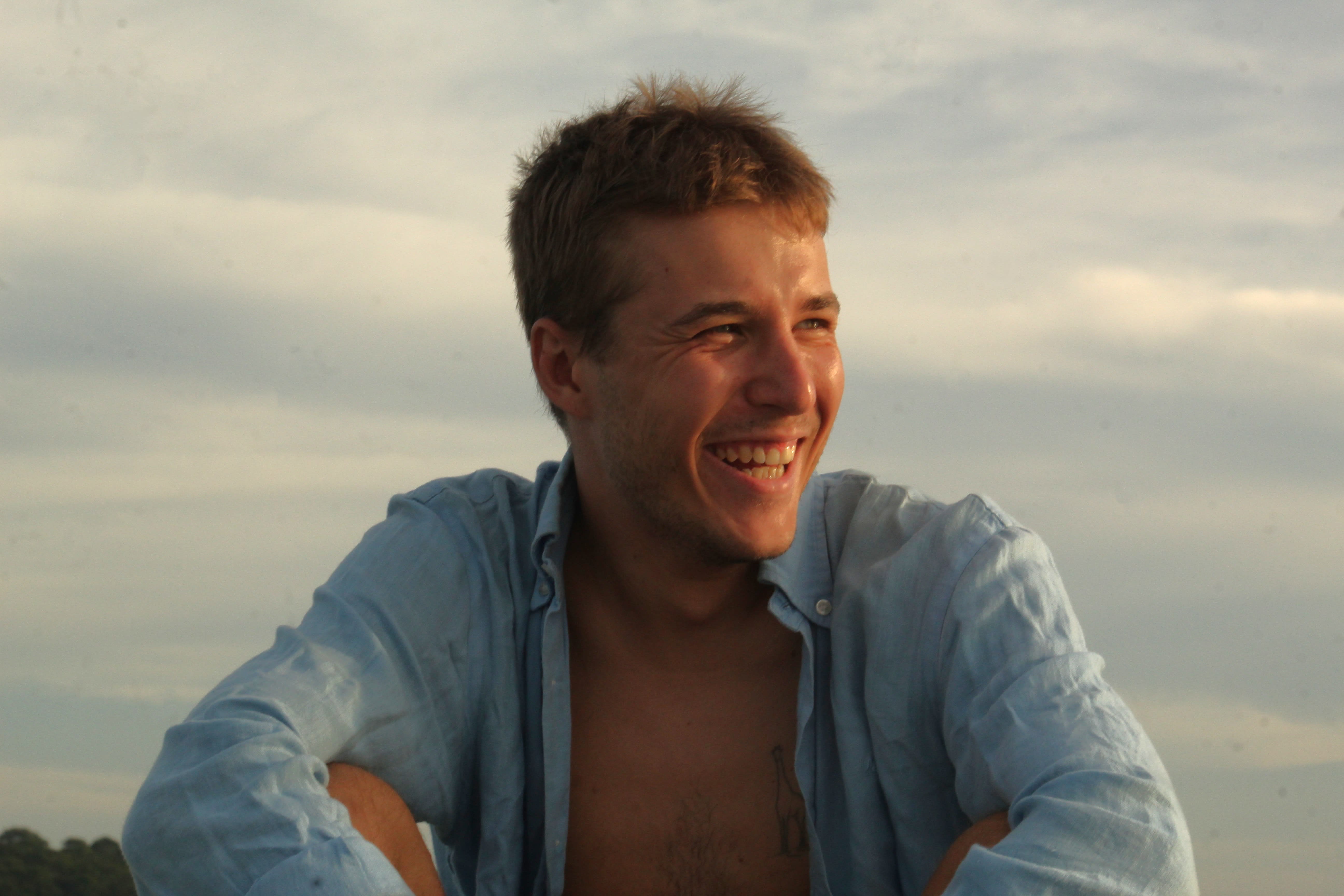
That is how I became a borderless photographer. Borders that she shattered one by one, so that I could cross them the way you leaf through an album. Every photo I take is a window I give back to her.